
The Canal and Navigable Waterway Engineers 

These engineers played a significant role in the development of the canal system in Britain during the Industrial Revolution. Their innovations helped to transform transportation and infrastructure in the country.


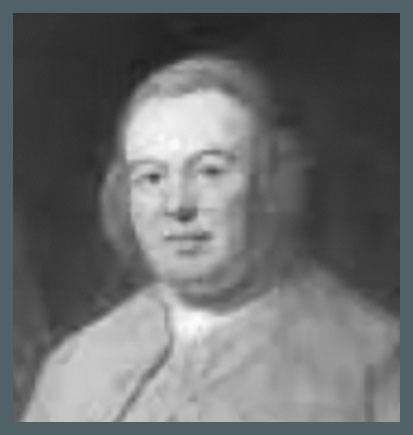
Benjamin Outram: English Civil Engineer who Lived from 1764 to 1805
Few figures played a more significant role in Britain’s transport revolution than Benjamin Outram. A gifted civil engineer, industrialist and entrepreneur, Outram helped expand the nation’s canal network during the height of the Industrial Revolution while also pioneering some of the earliest tramway systems. His innovative approach to moving raw materials efficiently helped bridge the gap between the canal era and the coming age of railways.
Although his life was cut short at the age of 41, Outram’s influence on British engineering continued long after his death. His work on canals, ironworks and tramroads helped shape the infrastructure that powered Britain’s industrial growth.
Early Life and Education
Benjamin Outram was born on 1 April 1764 in Alfreton, Derbyshire. Raised within a family heavily involved in land management and surveying, he developed practical engineering skills from an early age. His father, Joseph Outram, worked as a land agent, surveyor and agricultural adviser, providing Benjamin with valuable exposure to the fields of mapping, drainage, mining and infrastructure planning.
Growing up in Derbyshire placed Outram close to some of the country’s most important mining districts. This environment sparked his interest in industrial development and transportation, two sectors that would ultimately define his career.
Learning the Trade on the Cromford Canal
Outram’s entry into professional engineering came through the construction of the Cromford Canal in Derbyshire. The project was overseen by the renowned canal engineer William Jessop, one of the most respected civil engineers of the period.
Working as Jessop’s assistant, Outram gained first-hand experience in large-scale canal construction. One of the most challenging elements of the project was the Butterley Tunnel, an engineering achievement that demonstrated his growing technical abilities. The excavation also revealed valuable deposits of coal and ironstone, which would later inspire new business opportunities.
This period proved crucial to Outram’s development, allowing him to combine practical engineering knowledge with a strong understanding of industrial economics.
The Creation of the Butterley Ironworks
Recognising the potential of the mineral resources discovered during canal construction, Outram became involved in establishing an industrial enterprise at Butterley. In 1790, he helped found Benjamin Outram & Company, an organisation that combined mining, iron production and engineering services.
The company quickly earned a reputation for producing high-quality ironwork used in canals, bridges and tramways. Its success allowed Outram to expand both his engineering activities and his influence within Britain’s rapidly developing industrial economy.
The business would later become known as the Butterley Company, one of the most important engineering and manufacturing firms of the nineteenth century.
Building Britain’s Industrial Waterways
As demand for improved transportation grew, Outram became involved in a number of major canal projects across England. His reputation as a skilled engineer grew steadily throughout the 1790s and early 1800s.
Derby Canal
The Derby Canal was one of Outram’s most notable achievements. Opened in 1796, the waterway linked Derby with existing canal networks, providing manufacturers and traders with an efficient route for transporting goods and raw materials.
The project also featured an early iron aqueduct, showcasing Outram’s willingness to utilise new materials and construction techniques in civil engineering.
Peak Forest Canal
Outram played a leading role in the development of the Peak Forest Canal, a strategically important waterway designed to carry limestone and other materials from the Peak District to expanding industrial regions.
The canal improved commercial links between quarrying districts and manufacturing centres, lowering transportation costs and supporting regional economic growth.
Huddersfield Narrow Canal
Another major undertaking was the Huddersfield Narrow Canal, a challenging project that crossed the Pennines. The route strengthened trade connections between Yorkshire and Lancashire and demonstrated the increasing ambition of canal engineering during the Industrial Revolution.
Pioneering Tramways and Industrial Transport
While canals formed the backbone of Outram’s career, his influence extended beyond waterways. He recognised that canals alone could not efficiently reach every quarry, mine and factory. To solve this problem, he developed networks of tramways that linked industrial sites directly to canal basins.
One of his most significant early schemes connected the limestone quarries at Crich with the Cromford Canal. The line used cast-iron plate rails and horse-drawn wagons, making it possible to transport heavy loads more efficiently than by road.
Outram championed the use of durable iron rails, standardised construction methods and improved wagon designs. These innovations helped establish important engineering principles that influenced later railway development.
Benjamin Outram’s Greatest Achievements
- Assisted in the successful construction of the Cromford Canal, one of Derbyshire’s most important waterways.
- Co-founded the Butterley ironworks, which evolved into one of Britain’s leading engineering companies.
- Served as engineer for major canals including the Derby Canal, Peak Forest Canal and Huddersfield Narrow Canal.
- Promoted the use of iron structures in canal engineering, including early iron aqueducts.
- Developed tramway systems that connected mines and quarries directly to canal networks.
- Advanced the use of cast-iron rails, influencing the evolution of Britain’s railway industry.
- Helped create integrated transport systems that combined waterways, tramroads and industrial facilities.
At the Peak of His Career
By the beginning of the nineteenth century, Outram had become one of Britain’s most respected engineers. His projects extended across multiple regions, and his expertise was sought by canal companies, mine owners and industrial investors alike.
Unlike many engineers of his era, he successfully combined technical knowledge with commercial vision. He understood that transportation, mining and manufacturing were interconnected industries and designed infrastructure that supported all three.
His ability to integrate canals with tramways created efficient distribution networks that increased productivity and reduced costs for industrial businesses throughout the country.
Death and Lasting Legacy
Benjamin Outram died in London on 22 May 1805. Although his engineering career lasted little more than two decades, he left behind an impressive body of work that contributed significantly to Britain’s industrial development.
Historians often view Outram as a key transitional figure between the canal age and the railway age. His waterways supported the rapid growth of industry, while his tramway innovations pointed towards the transport systems that would dominate the nineteenth century.
Many of the engineering concepts he promoted, particularly the integration of different transport modes, remained influential long after his death.
Conclusion
Benjamin Outram was far more than a canal engineer. He was a visionary transport planner, industrial entrepreneur and engineering innovator whose work helped transform the movement of goods throughout Britain. From the Cromford Canal and Peak Forest Canal to the early tramways that foreshadowed the railway revolution, Outram’s achievements played a vital role in the success of the Industrial Revolution. His legacy endures as one of the great pioneers of Britain’s transport and industrial heritage.